How to Choose an Interior Paint Color in the Room Itself
A small card under store lights tells you very little, so the room itself has to do the judging.
October 21, 2026 · 4 min read
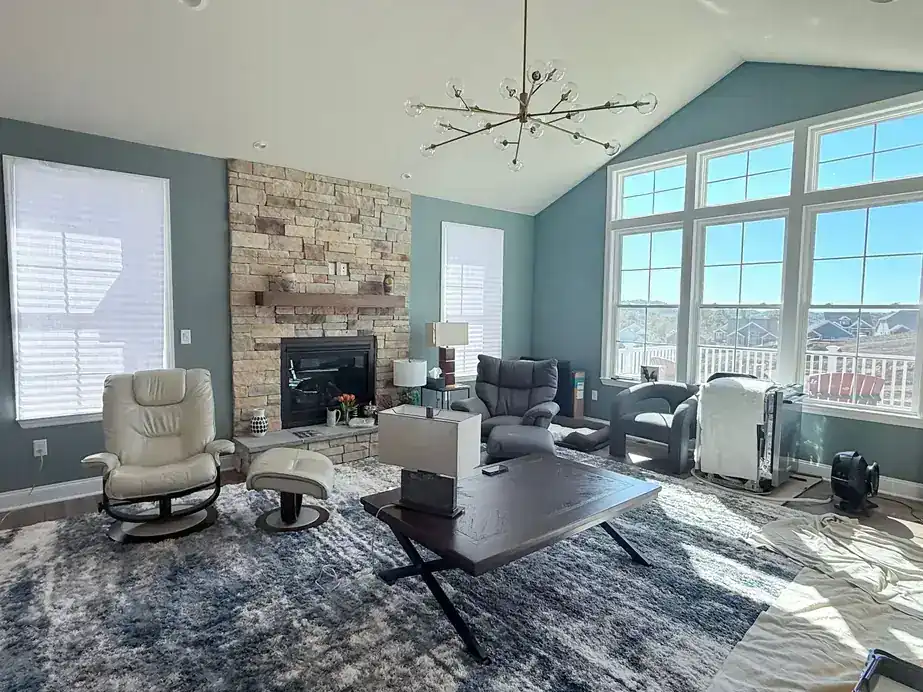
Paint color looks different in the store, on a phone screen and on your wall. A small card under store lights says little about how a color will behave in your living room at four in the afternoon. The only reliable test is the room itself.
Why does the same color look different from room to room?
Light is the whole story. A north-facing window gives cooler, flatter light all day, which tends to pull blues and greys toward steel and make warm beiges look dull. A south-facing room gets warmer, brighter light that can make a cool grey look friendlier than it did on the card. Your lamps add another layer: warm bulbs push everything toward yellow, and cooler bulbs push toward blue.
This is why a color you loved in a friend's house can disappoint in yours. Their light is not your light. A great room with tall windows in Cranberry and a smaller living room in Aliquippa can take the very same paint and show you two different colors. Judge each room separately.
How do you test a color properly?
Skip the tiny chip taped up for ten minutes. Paint a large sample, roughly two feet square, directly on the wall, or paint a board you can carry around the room. Leave a border of the existing color around it so your eye has something to compare against. Then look at it in the morning, at midday, in the evening and again with the lamps on.
- Put samples on at least two walls, because the light changes from wall to wall in the same room.
- Check the color beside your trim, not only against the old wall color.
- Look at it under the lights you really use at night.
- Live with it for a few days before you decide.
What are undertones, and why do they cause surprises?
Nearly every neutral has a hidden lean. A grey can lean blue, green, purple or warm. A white can lean yellow, pink or cool. Undertone is what you notice when the color goes up and looks greener than you expected. To find it, hold your sample against a pure white sheet of paper, then against the finishes you are not changing.
That second step matters most. The undertone of the paint should agree with the undertone of the things that stay: flooring, stone, brick, a fireplace surround, a granite counter. If the stone around your fireplace has a warm cast and the paint leans cool, the two will argue every time the sun hits that wall.
Which trim white goes with which wall color?
Trim white is the choice most people overlook, and it changes how every wall color reads. A bright, clean white gives crisp definition against soft greys and blue-greys. A softer, creamier white feels quieter and suits warm walls. Deep colors like navy or charcoal look sharp beside a clean white and a little muddy beside a yellowed one.
Test the trim white the same way you test the walls: on a board or a stretch of real trim, right next to the wall sample. Remember sheen too. Trim usually gets more sheen than the wall so it holds up to hands and wiping, and sheen changes how a white looks in the light.
When does an accent wall make sense?
An accent wall earns its place when the room already has a natural focal point: the fireplace wall, the wall behind a bed, or the wall your eye lands on when you walk in. It works poorly on a wall that is interrupted by windows and doors on every side,.
The accent color should relate to the other walls. Usually that means the same family taken darker, such as a deep slate or navy beside a lighter neighbor, rather than an unrelated hue that has to fight the furniture. The dark wall and the light walls should share an undertone.
Where does a designer's eye help most?
Most people can narrow a color down to a few candidates alone. The hard part is the last step: choosing between them, picking the complement for a feature wall and deciding the trim white. A second set of trained eyes saves second-guessing.
Dana and the crew at All Interior Painting are registered interior designers with Sherwin-Williams, and color selection is part of the consultation. We supply all the paint ourselves and use Sherwin-Williams exclusively, so the color you settle on in the room is the one that goes on the wall.
If you are weighing colors for a living room, bedroom or whole floor, the interior painting services page covers what we paint, from walls and ceilings to trim, doors and accent walls. Dana offers free, detailed, itemized estimates, so call (412) 205-8263 and we can talk through your room before you buy a single sample.
All Interior Painting, (412) 205-8263
Call (412) 205-8263More articles
Painting Kitchen Cabinets or Replacing Them: What Each Path Involves
If your cabinet boxes are sound and your layout works, a careful paint job changes the whole kitchen.
Panel Molding, Wainscoting and Board-and-Batten: What Each One Is and Where It Fits
Three trim styles that look alike in photos, and three very different answers to a blank wall.