Panel Molding, Wainscoting and Board-and-Batten: What Each One Is and Where It Fits
Three trim styles that look alike in photos, and three very different answers to a blank wall.
October 21, 2026 · 4 min read
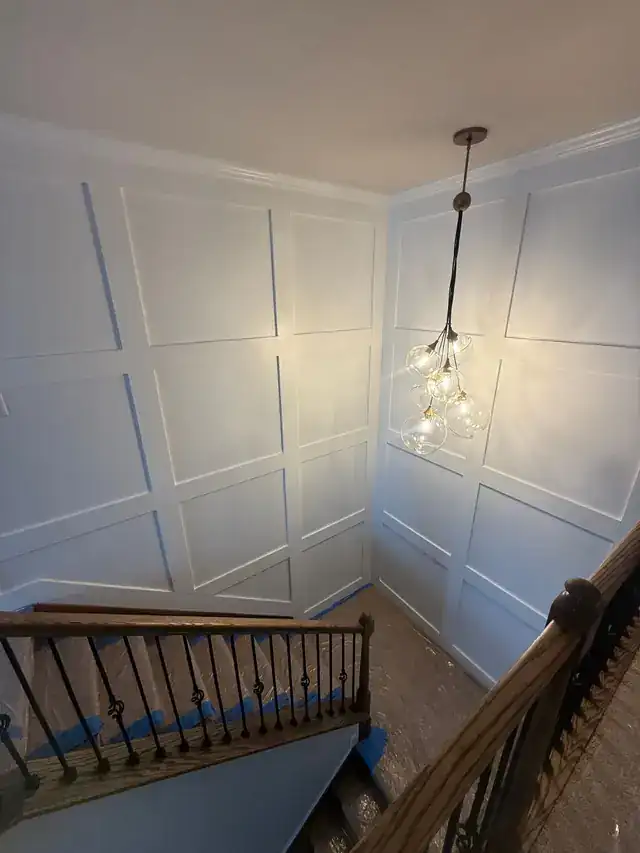
A plain painted wall is clean, but it can also feel unfinished, especially in a room with high ceilings or a long run of drywall nobody knows what to do with. Wall treatments built from trim solve that. The three people ask about most are panel molding, wainscoting and board-and-batten, and the names get swapped constantly. They are different things, and knowing which is which helps you choose one that fits your room.
What is panel molding?
Panel molding, sometimes called picture-frame molding, is thin trim applied directly to a flat wall to form rectangles or frames. The wall behind the trim is the same wall you started with. The molding just draws shapes on it, which creates shadow lines, rhythm and a sense of architecture without adding much weight.
Because it is applied, panel molding can be sized to the wall. A tall wall might get a row of tall frames. A shorter wall might get a lower row of squares. It can run from baseboard to ceiling or stop at a chosen height, and it works well painted all one color for a quiet, tailored look or in a deeper shade than the room for contrast.
What is wainscoting?
Wainscoting is the traditional name for a treatment that covers the lower part of a wall, often about a third to half of the way up, topped with a cap rail or chair rail. It can have raised panels, flat panels or simple vertical boards below the rail. Historically it protected walls from the scuffs of chairs and feet, and that practical side is still a good reason to choose it.
Wainscoting suits rooms where the lower wall takes abuse. Dining rooms are the classic case, since chair backs rub against walls all the time. Hallways, entryways and stairways also earn the protection. A painted wainscot wipes clean far more easily than a flat painted wall, and a two-tone look, with one color below the rail and another above, can make a long plain wall feel finished.
What is board-and-batten?
Board-and-batten uses wide boards or flat panels covering the wall, with narrow strips, called battens, set over the seams or spaced at regular intervals. The lines run vertically. The result is simpler and more casual than raised-panel wainscoting, with strong straight lines that make a ceiling feel taller.
It also tolerates a bolder color well. Board-and-batten painted in a deep blue-grey behind a dining table reads as a feature wall with real depth, and the same treatment in white is clean and a little farmhouse. You can run it partway up the wall or all the way to the ceiling, depending on the room.
Which room suits which treatment?
- Dining rooms: wainscoting or a chair rail for protection, or panel molding for a formal feel.
- Stairwells and long hallways: panel molding, which gives a long wall structure and works with the angle of the stairs.
- Entryways and mudroom spots: board-and-batten, which is practical and easy to wipe down.
- Bedrooms: board-and-batten or panel molding behind the bed as a feature wall.
- Bathrooms: painted wainscot or board-and-batten, as long as the paint is rated for moisture.
There are no strict rules. A stairwell with panel molding all the way up, finished in a color that matches the walls around it, can look like it was part of the original house. A dining room with a blue-grey board-and-batten feature wall can turn a bare room into the one everyone remembers.
What does the planning involve?
The most important work happens before any trim is cut. Someone has to measure the wall and divide it so the frames or battens come out even, with no skinny leftover piece at one end. Outlets, light switches, window casings and the thickness of the baseboard all affect the layout, and a plan that ignores them looks awkward in the finished room.
Once the trim is up, the finishing work decides everything. Nail holes get filled, joints get caulked and the surface gets sanded so the seams vanish. Then the whole assembly is painted, usually in a more durable sheen than the flat wall above it. Good installation with careless finishing still looks like a kit, and careful finishing is the reason a built wall looks like it grew there.
Who builds the trim, and who paints it?
It helps when the person who builds the trim is also the person who paints it, because the details line up. At All Interior Painting we install wainscoting, panel molding, chair rails, picture rails and custom built-up trim assemblies, and we paint them. We also handle baseboards, door and window casing, molding and trim repairs. Dana walks through the design with you first, so the trim is planned around your room instead of added to it.
If you are thinking about adding structure to a stairwell, a dining room or a bedroom wall, the trim installation services page covers what we build. Dana gives free, detailed, itemized estimates, and you can call (412) 205-8263 to talk through your wall.
All Interior Painting, (412) 205-8263
Call (412) 205-8263More articles
How to Choose an Interior Paint Color in the Room Itself
A small card under store lights tells you very little, so the room itself has to do the judging.
Painting Kitchen Cabinets or Replacing Them: What Each Path Involves
If your cabinet boxes are sound and your layout works, a careful paint job changes the whole kitchen.