Tile Backsplashes Behind the Sink and the Range: What to Know First
The wall behind your sink and the wall behind your range have very different jobs.
October 21, 2026 · 4 min read
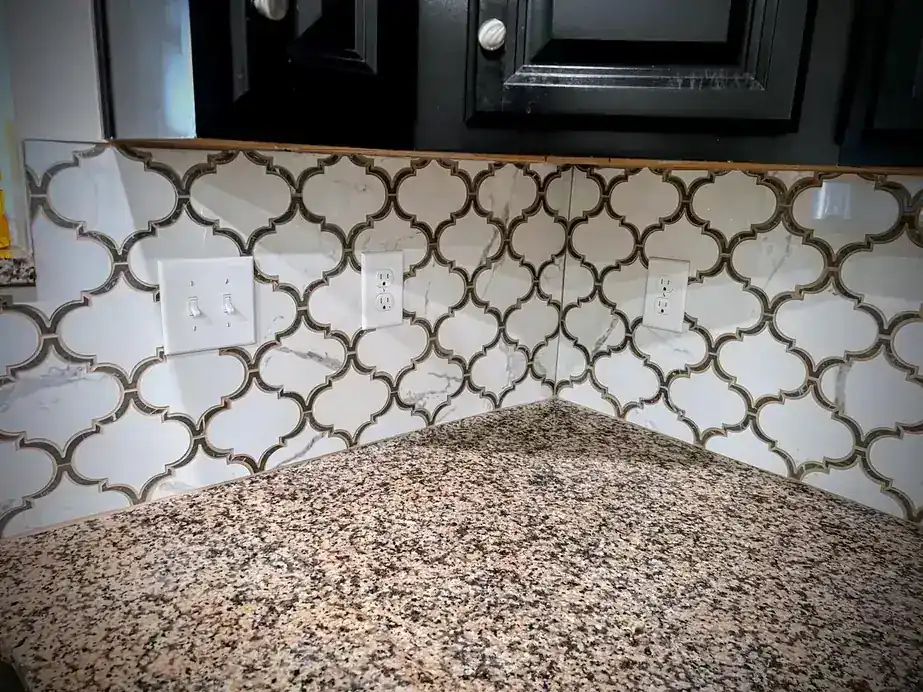
A backsplash is part protection and part decoration. It keeps water, cooking splatter and steam off the wall behind your counters, and it is one of the few places in a kitchen where you can add pattern, texture and color without repainting anything. It is also one of the places where small decisions show up for years. Before you pick a tile, it helps to know that the wall behind the sink and the wall behind the range are not facing the same problems.
What does the wall behind the sink face?
Water. Every time someone rinses a dish or fills a pot, droplets land on the wall behind the faucet, and they land there daily. Tile is a good answer because the surface is waterproof, but the tile is not the whole system. The grout lines are porous unless they are sealed or made of a material that resists water, and the joint where the tile meets the countertop needs a flexible seal.
That joint is a common weak point. Countertops and walls move slightly through the seasons, so the line where they meet should be sealed with caulk that flexes, not rigid grout that will crack. If you see a dark line or a gap along the counter in an older kitchen, that is often where water has been getting behind the tile.
What does the wall behind the range face?
Heat and grease. Cooking throws fat and oil upward and outward, and the wall behind a stove collects a fine film that you may not notice until you wipe it. Tile handles heat and cleans easily, but grout lines hold on to grease, so a tile with fewer joints, such as a larger format, tends to be easier to keep tidy than a small mosaic.
This is also the wall where people want to make a statement. A patterned tile or a bold shape behind the range becomes a focal point for the whole kitchen. Go ahead, but pick something you will still like when it is spattered with sauce.
How high should the tile go?
There are two common approaches. One runs the tile from the countertop to the underside of the upper cabinets, which gives a tidy, finished line and protects every inch of wall in the work zone. The other stops at a short height, a few inches above the counter, which is quicker and keeps the focus on the paint above it. Behind the range, many people run the tile higher or to the ceiling as a feature.
With open shelving or no upper cabinets, the tile needs to end somewhere deliberate, and a clean edge looks better than one that just stops.
What should you plan before the tile goes up?
- Layout: start from the center of the focal point, such as the sink or the range, so cuts at the ends are even and not thin slivers.
- Outlets and switches: cover plates and boxes need to sit properly against the new surface, so decide on them before tiling.
- Tile size and pattern: small mosaics mean more grout, and larger tile means fewer joints.
- Grout color: a color close to the tile hides stains, while a contrasting color highlights the pattern.
- Sealing: porous grout and natural stone need a sealer, and the sink wall needs a flexible joint at the counter.
It is also worth settling the paint color before the tile goes up, or at least choosing the two together. A backsplash in a cool grey or a white subway shape sits easily with most paints, while a strongly patterned tile like an arabesque is best with a quieter wall color around it.
What about repairs?
Not every backsplash job is a new install. Loose tiles, cracked tiles, crumbling grout and failed caulk lines are all common in older kitchens and bathrooms, and they are often repairable without redoing the wall. The first step is to find out why it failed. A tile that has popped off near the sink may be telling you that water is getting behind the wall, and putting a new tile over a wet wall only covers the evidence.
In bathrooms, the same ideas apply to the sink backsplash. It is a smaller area, but it takes daily splashes and toothpaste, and a clean, well-sealed edge along the vanity top keeps the wall behind it in good shape.
Who does the work, and what finishes it?
A good backsplash is a tile job and a paint job at the same time. The wall needs to be flat and clean before the tile goes on, and the surrounding paint and trim need to be touched up afterward so the new surface looks like it belongs. When the same crew handles both, the details line up: the paint meets the tile in a straight line, the caulk is neat, and nothing is left for you to finish.
All Interior Painting installs and repairs kitchen sink backsplashes, oven backsplashes and bathroom sink backsplashes, and handles the painting around them. If you are planning a new backsplash or fixing an old one, the tile backsplash installation and repair page lists what we do. Dana gives free, detailed, itemized estimates, and you can call (412) 205-8263 to set up a visit.
All Interior Painting, (412) 205-8263
Call (412) 205-8263More articles
How to Choose an Interior Paint Color in the Room Itself
A small card under store lights tells you very little, so the room itself has to do the judging.
Painting Kitchen Cabinets or Replacing Them: What Each Path Involves
If your cabinet boxes are sound and your layout works, a careful paint job changes the whole kitchen.